






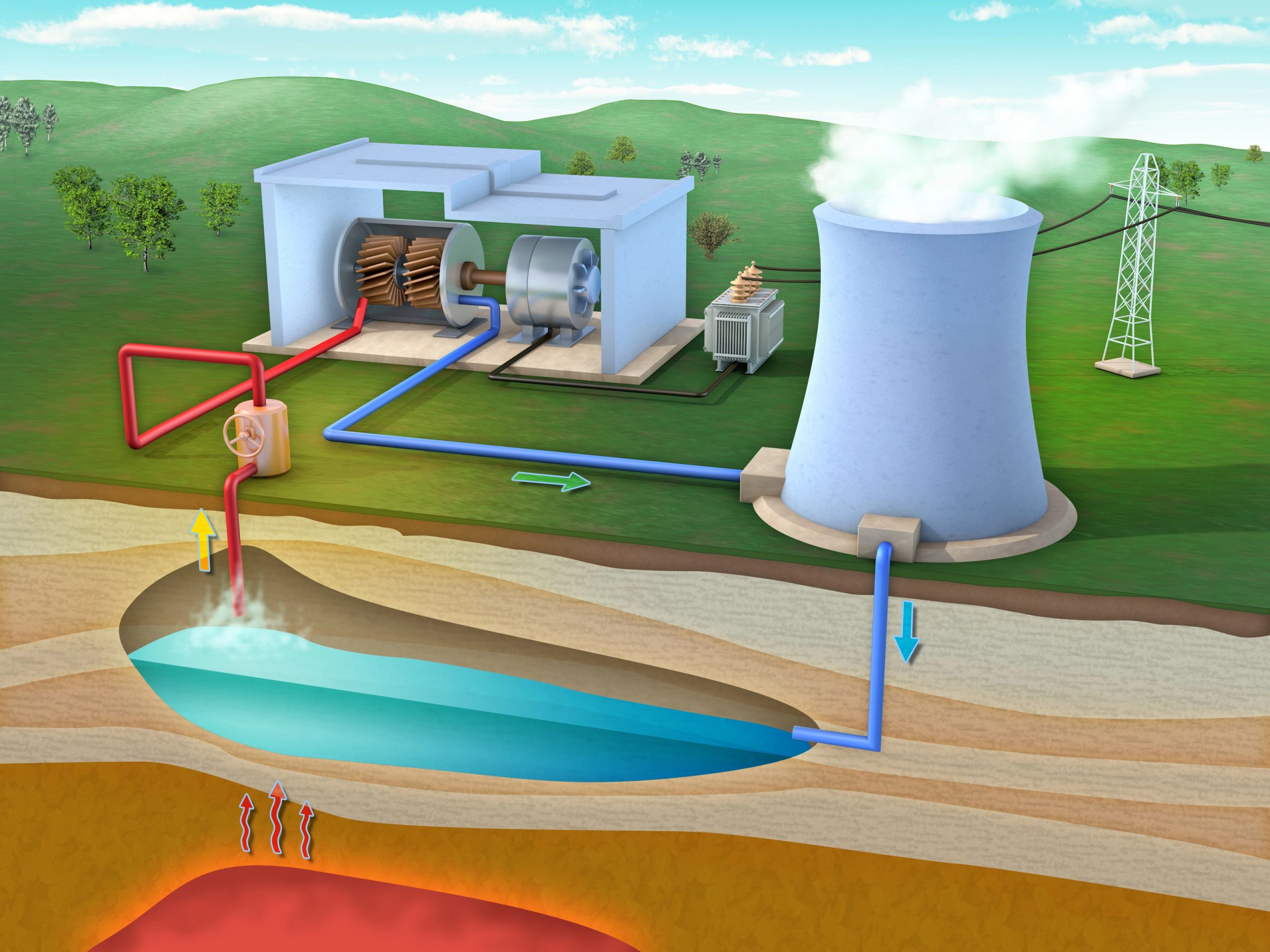
Geothermal energy, due to its renewability, availability, and independence from weather conditions, is increasingly becoming one of the most important forms of energy. Its enormous potential is being recognized by a growing number of countries that are investing knowledge and resources in the development of geothermal systems.
Unlike natural geothermal systems, which are located deep underground and consist of heat, water, and permeable rocks—allowing hot water to circulate naturally through the rock formations—the United States is developing the so-called Enhanced Geothermal System (EGS). These are artificially created reservoirs formed in areas where hot rocks exist but where there is insufficient natural permeability and water. The first successful demonstration of EGS was carried out in Northern California at “The Geysers” geothermal field, considered the largest geothermal complex in the world. In addition to the United States, EGS has also been successfully implemented at the pilot level in Europe.
How does EGS work?
EGS operates by injecting water—most commonly fresh or recycled water—into the subsurface under strictly controlled conditions. Under high pressure, the water expands existing microfractures and creates new fractures in hot, deep rock formations. In some cases, small amounts of technical additives (e.g., corrosion inhibitors or tracer substances used to monitor fluid flow) may be added, but the system primarily relies on water as the main heat-transfer medium.
To ensure that the fractures remain open even after pressure is reduced, a proppant is sometimes used. This is a fine solid material, such as quartz sand or ceramic granules, which acts as support and enables long-term fluid circulation. As the heated water circulates, heat is transported to the surface, where it can be used to generate electricity.
Advantages of EGS
As a source of clean and renewable energy, EGS makes a significant contribution to the U.S. energy portfolio. Since EGS is not limited to traditional geothermal areas in the United States, it can be expanded beyond those regions, making geothermal energy available across virtually the entire country. A key advantage of EGS is its ability to provide energy almost continuously, thereby reducing the need for energy storage technologies such as battery facilities.
A Roadmap for STE
As technologies related to Enhanced Geothermal Systems are still under development, this creates both opportunities and potential for STE. The creation of an EGS requires specific preparatory activities, including site assessment, determination of the initial formation permeability, temperature measurements, monitoring of static well parameters, as well as displacement and shear within the formation and the associated microseismic events—particularly induced seismicity related to the creation of an EGS reservoir during the exploitation phase.
STE possesses decades of expert knowledge in the design, construction, production, and application of cable probes and fiber-optic sensing systems. With advanced fiber-optic measurement technology at its disposal, the company sees its future in this industry and in the development of the required technologies. Our experience and expertise in these technologies have already been demonstrated through our active involvement in the development of the first deep geothermal systems in Austria, including the project in Vienna’s Aspern district.