







Geothermal energy is increasingly being mentioned as one of the stable and long-term sustainable energy sources in Europe. This has also been recognized by the European Union, which a few months ago adopted the European Geothermal Strategy and an accompanying action plan aimed at elevating geothermal energy to a higher level within energy policy.
The concrete objective of this strategy is to install 240 GW of geothermal electricity and heat capacity by 2040. Achieving such an ambitious plan will only be possible with a significant increase in the number of geothermal projects across Europe, which also implies much more intensive subsurface exploration before drilling begins.
It is well known that geothermal drilling can trigger microseismic events in the form of small earthquakes caused by stress changes in rocks at great depths. Although such microearthquakes are generally very weak and often not even felt by people, monitoring them is extremely important. Not only does it enable a better understanding of the processes occurring underground, but it also allows for a precise assessment of the technical and economic potential of geothermal resources.
The more numerous, higher-quality, and more accessible the geological data are, the greater the likelihood of developing viable geothermal projects, as such data represent a key tool for reducing investment risk.
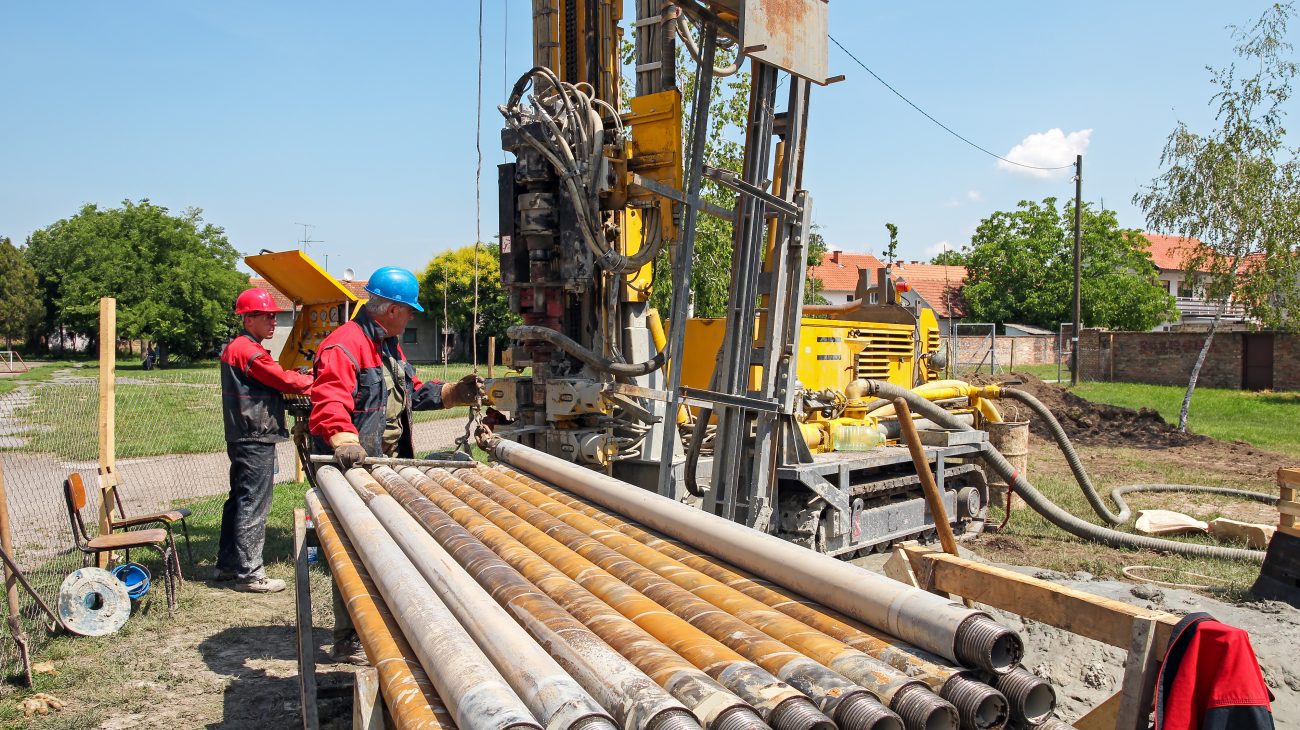
Geothermal drilling
For this reason, geothermal sites in many European regions are monitored through seismic networks designed for the continuous observation of microseismic activity. For example, in the greater Munich area, monitoring of geothermal projects is carried out through a joint measurement system that includes state seismic stations operated by the Bavarian Seismological Service as well as private monitoring stations operated by geothermal plant operators. The recorded data are analyzed independently—both by government institutions and by the operators themselves.
A New Generation of Measurements: Fiber Optic Technology
The development of such monitoring systems is closely linked to modern digital infrastructure. This is where above-ground, shallow-subsurface, and deep-subsurface fiber-optic networks play an important role, enabling the acquisition of large volumes of subsurface data in real time, particularly seismic and microseismic data. These data represent a new stream of independent information that can be compared with conventional measurement systems and integrated into advanced monitoring and analysis platforms.
This development also opens up numerous new opportunities for STE, as the company develops and implements solutions based on fiber optic technology that enable the collection and transmission of various high-resolution subsurface data in real time, even in so-called harsh environments characterized by high temperatures and pressures. The development of advanced infrastructure—whether through existing or newly installed systems—can therefore play an important role in projects aimed at monitoring seismic activity, geological structures, and the safety of geothermal wells.
In the context of the growing importance of geothermal energy in Europe’s green energy transition, reliable and advanced infrastructure that can be used for measurement and monitoring purposes is becoming a key element for the successful development of smart, multi-purpose urban fiber optic infrastructure, one that also integrates deep-subsurface systems such as geothermal energy installations.